Hidden Engine of Digital Worlds: Understanding RNGs
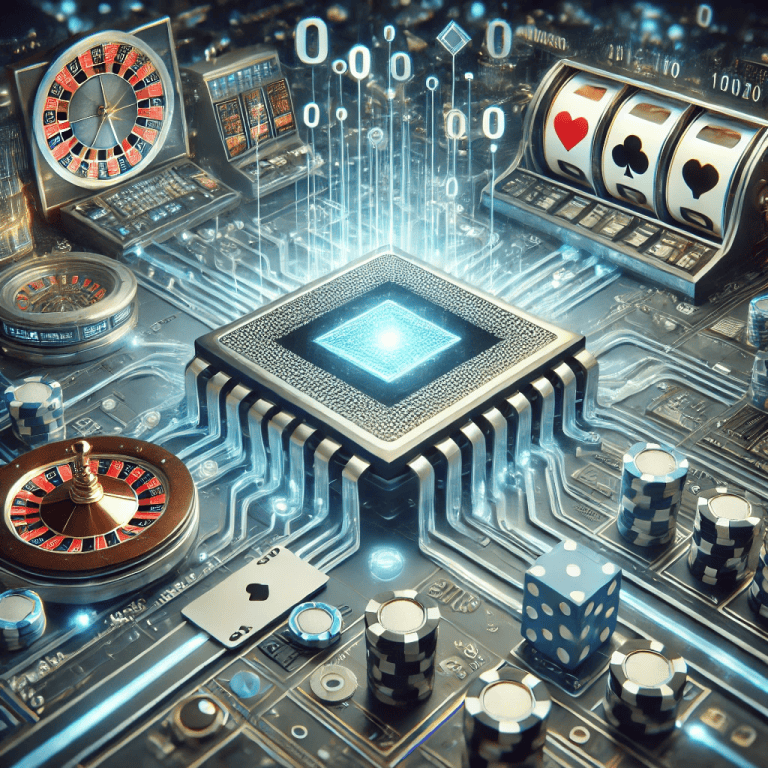
The question “Does true randomness exist?” has puzzled thinkers since mathematician Auguste Cournot first defined chance as the intersection of independent causal chains. This conceptual foundation underpins modern Random Number Generators (RNGs) – invisible architects shaping video games, cryptography, and scientific simulations. Remarkably, appreciating their significance requires no advanced mathematical training.
Core Mechanics of RNG Systems
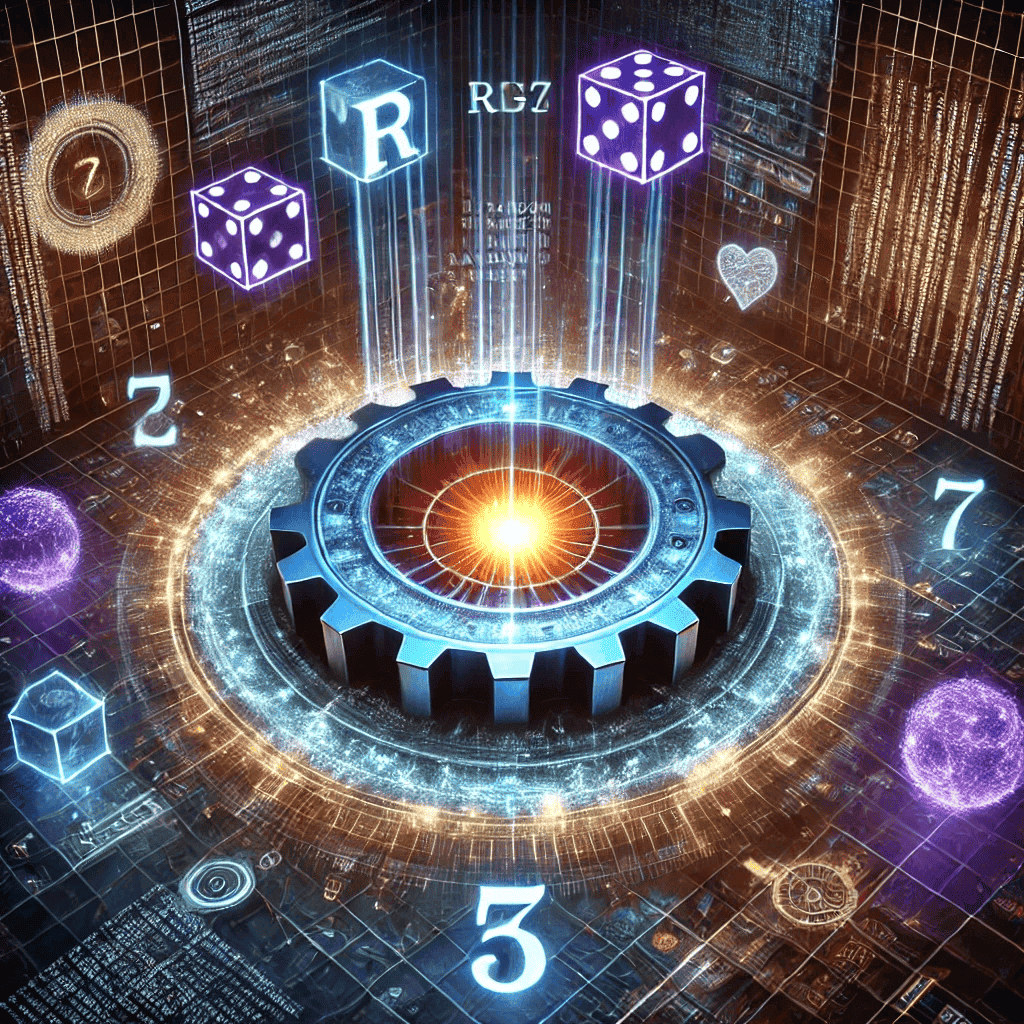
At their essence, all RNGs create sequences where each number stands independent of its predecessors. This separation forms the bedrock of digital randomness. Every sequence begins with a “seed” – the initial value that sparks the generative process. The nature of this seed fundamentally distinguishes the two primary RNG categories that dominate technological applications.
True Randomness: Harvesting Cosmic Chaos
True Random Number Generators (TRNGs) capture entropy from physical phenomena. These systems transform unpredictable natural events into digital randomness, leveraging processes like quantum particle decay, atmospheric electromagnetic interference, and microscopic thermal fluctuations within computer hardware. Such physical sources provide maximum entropy, making TRNGs indispensable for high-stakes applications like military cryptography where absolute unpredictability is non-negotiable. Their implementation demands specialized hardware, creating a trade-off between perfect randomness and practical accessibility.
Pseudo-Random Generators: Mathematical Miracles
In contrast, Pseudo-Random Generators (PRNGs) achieve randomness through computational algorithms. Starting with a digital seed (often derived from system timestamps), mathematical engines like the Mersenne Twister process this value through iterative functions to produce statistically random sequences. While computationally efficient and perfectly suited for most software applications, PRNGs carry an inherent vulnerability: if the initial seed is known, the entire sequence becomes predictable. This limitation has driven ingenious solutions that blend mathematical elegance with real-world complexity.
Bridging the Gap: Entropy Engineering
To overcome predictability challenges, developers employ sophisticated entropy enhancement techniques. By incorporating unpredictable human interactions – mouse movement patterns, microsecond variations in keystroke timing, or network packet arrival intervals – PRNG systems gain layers of real-world randomness. Some advanced implementations even combine TRNG and PRNG approaches, seeding mathematical algorithms with physical entropy to create hybrid systems that balance efficiency with robust unpredictability.
Gaming’s Invisible Architect
Video games showcase RNGs’ transformative power most vividly. These systems generate unique Minecraft worlds from numerical seeds, determine surprise weapon drops in adventure games, and create adaptive enemy behaviors that respond to player skill levels. Multiplayer games rely on RNGs for fair resource distribution across virtual landscapes, while procedural generation algorithms use random number streams to assemble infinite variations of quests and environments. Without this hidden machinery, digital worlds would lose their replayability and sense of wonder.
The Trust Imperative
As RNGs increasingly mediate digital experiences, verification mechanisms have become essential. Independent auditing firms employ rigorous statistical test batteries like the Diehard suite and TestU01 to certify system integrity. International standards such as NIST SP 800-90 establish benchmarks for acceptable randomness, while open-source implementations allow community scrutiny. These processes transform abstract mathematical concepts into verifiable trust – particularly crucial when randomness affects competitive outcomes or sensitive operations.
Conclusion
RNGs represent a fascinating paradox: structured systems designed to harness chaos. From their philosophical beginnings to modern implementations, they continue balancing predictability with surprise, order with entropy. As our digital and physical worlds increasingly intertwine, these unsung engines of randomness will play ever more critical roles – invisible conductors orchestrating the delicate dance between human intention and mathematical chance that defines our technological landscape.